Freelancing Rates: How to Price Your Services Correctly
Master the art of pricing your freelance services with realistic rates and negotiation strategies.
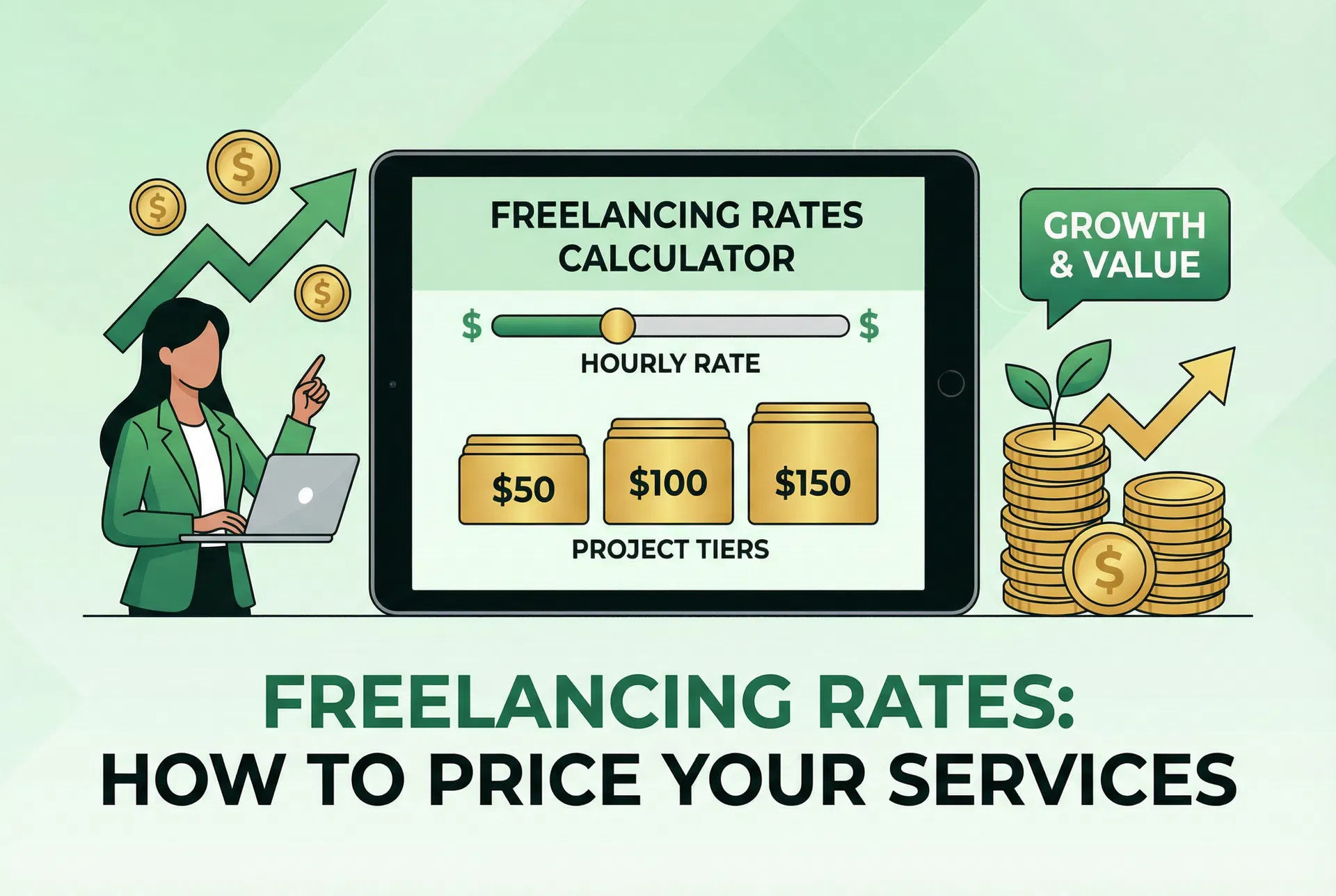
Freelancing Rates: How to Price Your Services Correctly
Understanding the Foundations of Freelance Pricing
Why Pricing Correctly Matters
Setting the right price for your freelance services is not merely about earning a living; it's about establishing your value, attracting the right clients, and building a sustainable career. Underpricing can lead to burnout, resentment, and a perception of lower quality, while overpricing might deter potential clients. A well-thought-out pricing strategy ensures you cover your costs, compensate yourself fairly, and invest in your professional development.
Common Pricing Models
Freelancers typically employ several pricing models, each with its own advantages and disadvantages:
- **Hourly Rate:** Charging a fixed amount for every hour worked. This model is straightforward and ensures compensation for all time spent, especially when project scope is unclear or prone to changes. However, it can penalize efficiency and may be perceived negatively by clients who prefer predictable costs.
- **Project-Based (Fixed Fee):** Charging a single, predetermined fee for an entire project. This model offers clients cost certainty and rewards efficient freelancers. It requires a clear scope of work and careful estimation to avoid undercharging if the project expands.
- **Value-Based Pricing:** Charging based on the perceived value or impact your services will bring to the client's business, rather than the time or effort involved. This advanced strategy can lead to significantly higher earnings but requires a deep understanding of client needs and the ability to articulate the return on investment (ROI) of your work.
Factors Influencing Your Freelance Rates
Several critical factors come into play when determining what to charge for your services.
Experience and Expertise
Your level of experience and specialized expertise are paramount. Highly skilled freelancers with a proven track record and unique capabilities can command higher rates. As you gain more experience, develop niche skills, and build a strong portfolio, your value in the market increases.
Industry and Niche
Different industries and niches have varying rate expectations. For instance, a freelance software developer specializing in AI might command a higher rate than a general content writer, due to the specialized nature and demand for their skills. Researching industry benchmarks is crucial.
Geographic Location
While freelancing often transcends geographical boundaries, local market rates can still influence your pricing, especially if you primarily serve clients in a specific region. The cost of living in your area can also impact the minimum income you need to sustain your lifestyle.
Project Complexity and Scope
More complex projects requiring specialized knowledge, extensive research, or a longer timeline naturally warrant higher rates. A clear understanding of the project's scope, deliverables, and potential challenges is essential for accurate pricing.
Market Demand
The demand for your specific skills plays a significant role. If your services are in high demand and there's a limited supply of qualified freelancers, you have more leverage to set higher rates. Conversely, in a saturated market, you might need to adjust your pricing to remain competitive.
Calculating Your Ideal Freelance Rate
Determining your ideal freelance rate involves more than just picking a number. It requires a strategic approach that accounts for your financial needs and business expenses.
Determining Your Desired Annual Income
Start by identifying how much you need or want to earn annually to cover your personal expenses, savings, and financial goals. This figure forms the foundation of your rate calculation.
Accounting for Business Expenses
As a freelancer, you're responsible for expenses that an employee typically wouldn't be. These include:
- **Taxes:** Freelancers often pay self-employment taxes, which include Social Security and Medicare contributions, in addition to income tax. It's wise to set aside a significant portion of your income for taxes.
- **Software and Tools:** Subscriptions to design software, project management tools, accounting software, and other industry-specific applications.
- **Insurance:** Health insurance, liability insurance, and other professional coverage.
- **Benefits:** Unlike employees, freelancers don't receive paid time off, sick leave, or retirement contributions from an employer. Your rates need to factor in these uncovered costs.
- **Professional Development:** Courses, workshops, conferences, and books that help you stay competitive and expand your skill set.
- **Marketing and Sales:** Costs associated with building your brand, website, and acquiring new clients.
Estimating Billable Hours
Unlike a full-time employee, not all your working hours as a freelancer are billable. You need to account for time spent on:
- **Administrative Tasks:** Invoicing, emails, scheduling, and general business management.
- **Marketing and Sales:** Prospecting, writing proposals, and networking.
- **Professional Development:** Learning new skills or improving existing ones.
- **Unpaid Time Off:** Holidays, sick days, and vacations.
A common estimation is that only 60-70% of a freelancer's time is billable. For example, if you work 40 hours a week, you might only bill for 24-28 hours.
The Rate Calculation Formula
Once you have these figures, you can use a formula to determine your hourly rate:
```
(Desired Annual Income + Annual Business Expenses) / (Estimated Annual Billable Hours)
```
For project-based pricing, you would estimate the total hours a project will take and multiply it by your calculated hourly rate, then add a buffer for unforeseen circumstances.
Practical Steps to Setting Your Rates
1. Research Market Rates
Before finalizing your rates, research what other freelancers with similar experience and skills are charging for comparable services. Websites like Upwork, Fiverr, and industry-specific forums can provide valuable insights. Remember that these are benchmarks, not strict rules.
2. Define Your Value Proposition
Clearly articulate what makes your services unique and valuable. Do you offer specialized expertise, faster turnaround times, or a unique creative approach? Highlighting your unique selling points justifies your rates.
3. Start with a Base Rate and Adjust
It's often helpful to start with a base rate derived from your calculations and then adjust it based on project complexity, client budget, and your confidence level. Don't be afraid to negotiate.
4. Offer Tiered Packages
Consider offering different service packages at various price points. This allows clients to choose an option that best fits their budget and needs, while also potentially upselling them to higher-value services.
5. Review and Adjust Regularly
The market is dynamic, and your skills will evolve. Regularly review your rates (e.g., annually or after every few major projects) to ensure they remain competitive and reflect your current value and experience.
Realistic Earning Potential and Timelines
Freelancing offers significant earning potential, but it's rarely an overnight success. Realistic expectations are crucial.
Earning Potential
Earning potential varies widely based on your niche, experience, location, and marketing efforts. Some top freelancers in high-demand fields like AI development, cybersecurity, or specialized consulting can earn six figures annually [1]. However, many freelancers start with more modest incomes, gradually increasing their rates as they build their portfolio and reputation. According to a 2025 freelancing statistics report, income potential was a key motivator for 67% of freelancers [2].
Timelines
Building a sustainable freelance business takes time. It's common for new freelancers to spend the first 6-12 months building a client base, refining their services, and establishing their brand. Significant income growth often occurs after the first year or two, as referrals and repeat business become more frequent.
Challenges in Freelance Pricing
Underestimating Costs and Time
One of the most common pitfalls is underestimating the time a project will take or failing to account for all business expenses, leading to undercharging and financial strain.
Fear of Losing Clients
Many freelancers, especially new ones, fear that raising their rates will scare away clients. While some clients may leave, those who value quality and professionalism will often be willing to pay a fair price.
Scope Creep
Projects often expand beyond their initial scope. Without clear contracts and processes for managing scope creep, freelancers can end up doing extra work for free.
Imposter Syndrome
Feeling like you're not good enough or don't deserve higher rates is a common psychological barrier that can prevent freelancers from charging what they're worth.
Overcoming Pricing Challenges
1. Develop Clear Contracts and Scope Documents
Always have a detailed contract that outlines the project scope, deliverables, timelines, and payment terms. This protects both you and the client and helps prevent scope creep.
2. Communicate Your Value Confidently
Be prepared to articulate the value you bring to a project. Focus on the benefits and results your services provide, rather than just the tasks you perform.
3. Build a Strong Portfolio and Testimonials
A robust portfolio showcasing your best work and positive testimonials from satisfied clients are powerful tools for justifying higher rates.
4. Network with Other Freelancers
Connecting with other freelancers can provide valuable insights into pricing strategies, market rates, and how to overcome common challenges.
Conclusion: Building a Sustainable Freelance Career
Pricing your freelance services correctly is an ongoing process that requires research, self-awareness, and confidence. It's not about finding a magic number, but rather developing a strategic approach that ensures your financial well-being while delivering exceptional value to your clients. Embrace the journey, learn from every project, and continually refine your pricing strategy to build a thriving and sustainable freelance career.
References
[1] Upwork. (2026). *The 24 Best Freelance Jobs That Pay the Most in 2026*. [https://www.upwork.com/resources/highest-paying-freelance-jobs](https://www.upwork.com/resources/highest-paying-freelance-jobs)
[2] Jobbers.io. (2025). *Freelancing Statistics 2026: The Complete Industry Analysis That Changes Everything*. [https://www.jobbers.io/ultimate-freelancing-statistics-for-2025-the-complete-industry-analysis-that-changes-everything/](https://www.jobbers.com/ultimate-freelancing-statistics-for-2025-the-complete-industry-analysis-that-changes-everything/)
Ready to Start?
Explore more resources and guides to help you succeed in your online income journey.
Related Articles

How to Start Freelancing with No Experience: A Complete Guide
A complete guide on how to start freelancing with no experience. Learn to identify skills, build a portfolio, find clients, and grow your freelance career.

How to Build a Freelancing Portfolio That Gets Clients
Learn effective strategies to build a compelling freelance portfolio that attracts clients and showcases your best work.
Common Freelancing Mistakes to Avoid as a Beginner
Avoid common pitfalls that beginner freelancers face and learn from the mistakes of others.